SmartFusion
Back to portfolio

About Project

Safarifone Data Center

Smart Fusion built out Safarifone's data center on Proxmox VE, a six-node cluster on Supermicro and HP ProLiant servers consolidating the operator's digital services and back-office systems, with the storage, networking, high availability, backup, and monitoring to run a carrier-grade platform.

About Client

Safarifone

Safarifone, a telecommunications operator, was running its customer-facing and internal systems on separate physical servers with no shared platform, no failover, and manual, server-by-server operations. Smart Fusion consolidated the data center onto a Proxmox VE cluster of six servers, five Supermicro and one HP ProLiant DL380, migrating the operator's web properties, subscription portals, VoIP and DSL supporting systems, and back-office applications into isolated virtual machines. The build covered cluster setup, shared and local storage with snapshots, segmented carrier networking, high availability, scheduled backups with tested restores, monitoring, and a full administrator handover so Safarifone's team runs the platform itself.

View site
Safarifone Data Center hero

Safarifone's digital services running as isolated VMs on a six-node Proxmox VE cluster

A six-node cluster for the whole operator

Standalone servers were consolidated into a single Proxmox VE cluster where every system runs as an isolated virtual machine, live-migratable between nodes and administered from one console.

  • Six-node cluster on five Supermicro servers and one HP ProLiant DL380
  • Web properties, subscription portals, and back-office systems migrated into isolated KVM virtual machines and LXC containers
  • Shared and local storage with snapshots, thin provisioning, and scheduled replication
  • High availability, so critical services restart automatically on a healthy node if one fails
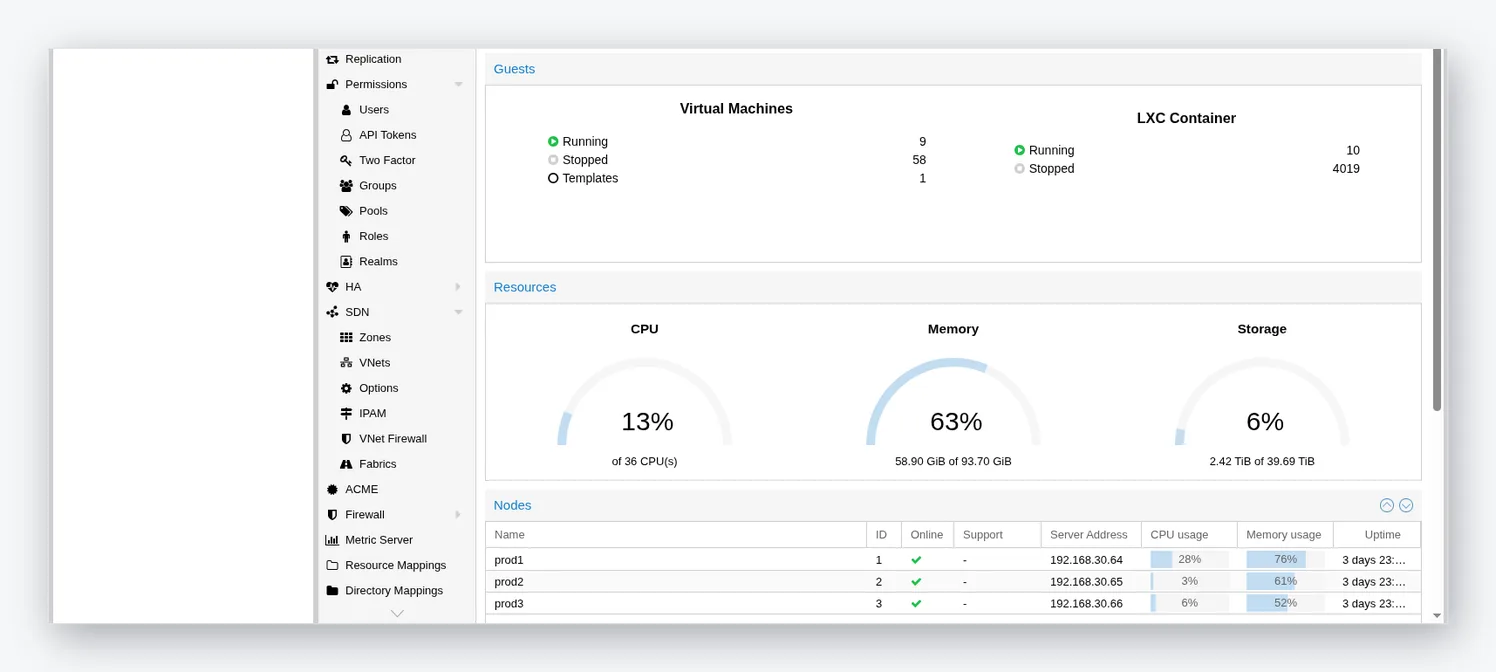
Proxmox VE datacenter summary showing cluster health, running virtual machines and containers, and resource usage

Cluster health, guests, and resource usage for the operator's platform in one view
Carrier networking and capacity

The cluster was wired into Safarifone's network with the segmentation and headroom a telecom platform needs.

  • VLAN segmentation separating management, cluster, public-facing, and internal traffic
  • Firewall and routing integration with the operator's existing network
  • Per-VM resource limits and quotas, with capacity monitored across the cluster
  • Room to add nodes and workloads without redesigning the platform
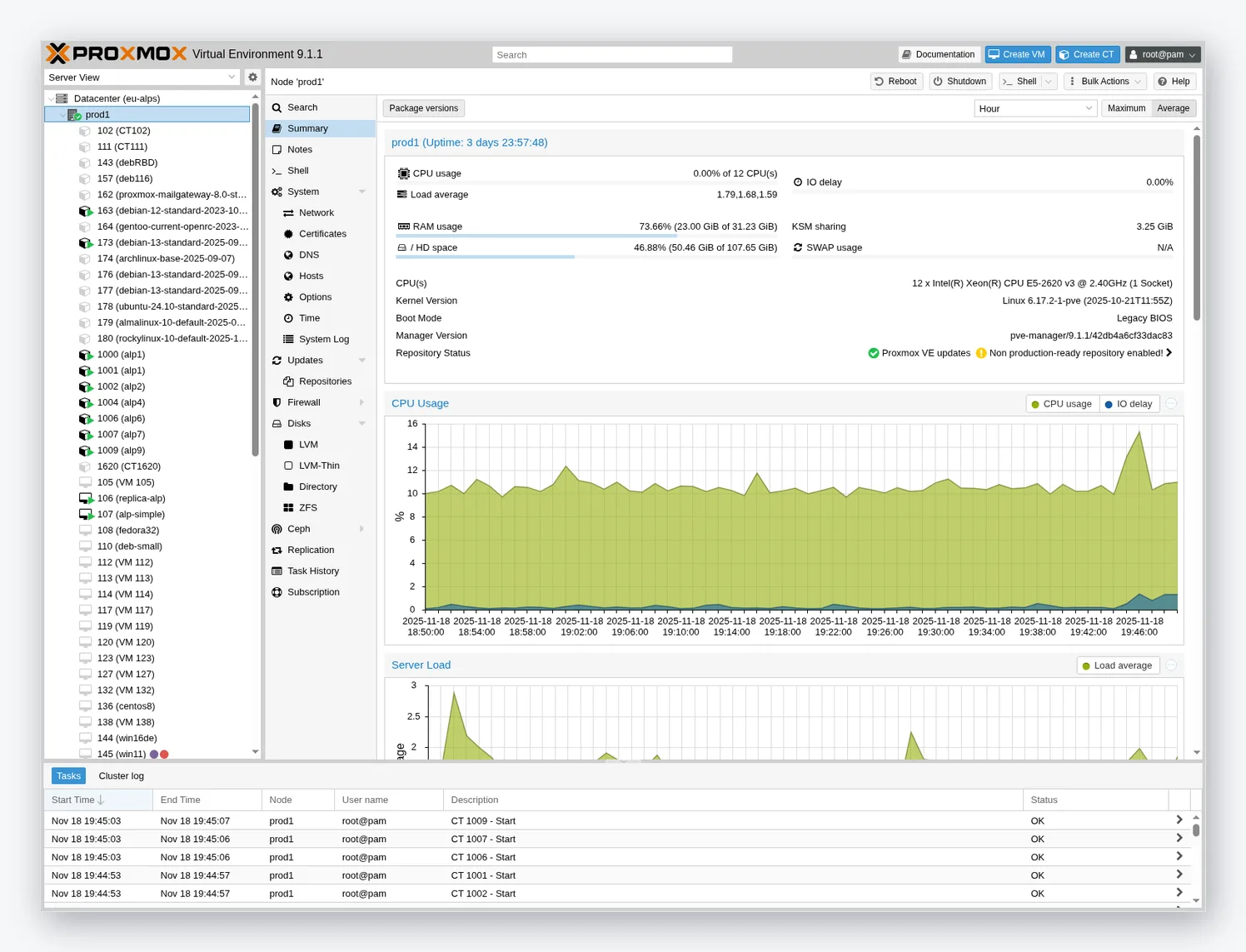
Proxmox VE node summary with CPU, memory, and hardware detail plus a live usage graph

Per-node compute, memory, and live utilization across the six-node cluster

Backup, monitoring, and operational control

The platform was hardened and made operable from day one, with off-cluster backups, monitoring, and documentation Safarifone's team owns.

  • Scheduled cluster-wide backups to a dedicated target, with periodic tested restores
  • Secure administration over VPN, with no management interface exposed to the public internet
  • Metrics dashboards, alerting, and runbooks covering the cluster and its workloads
  • Technical documentation and an administrator handover session
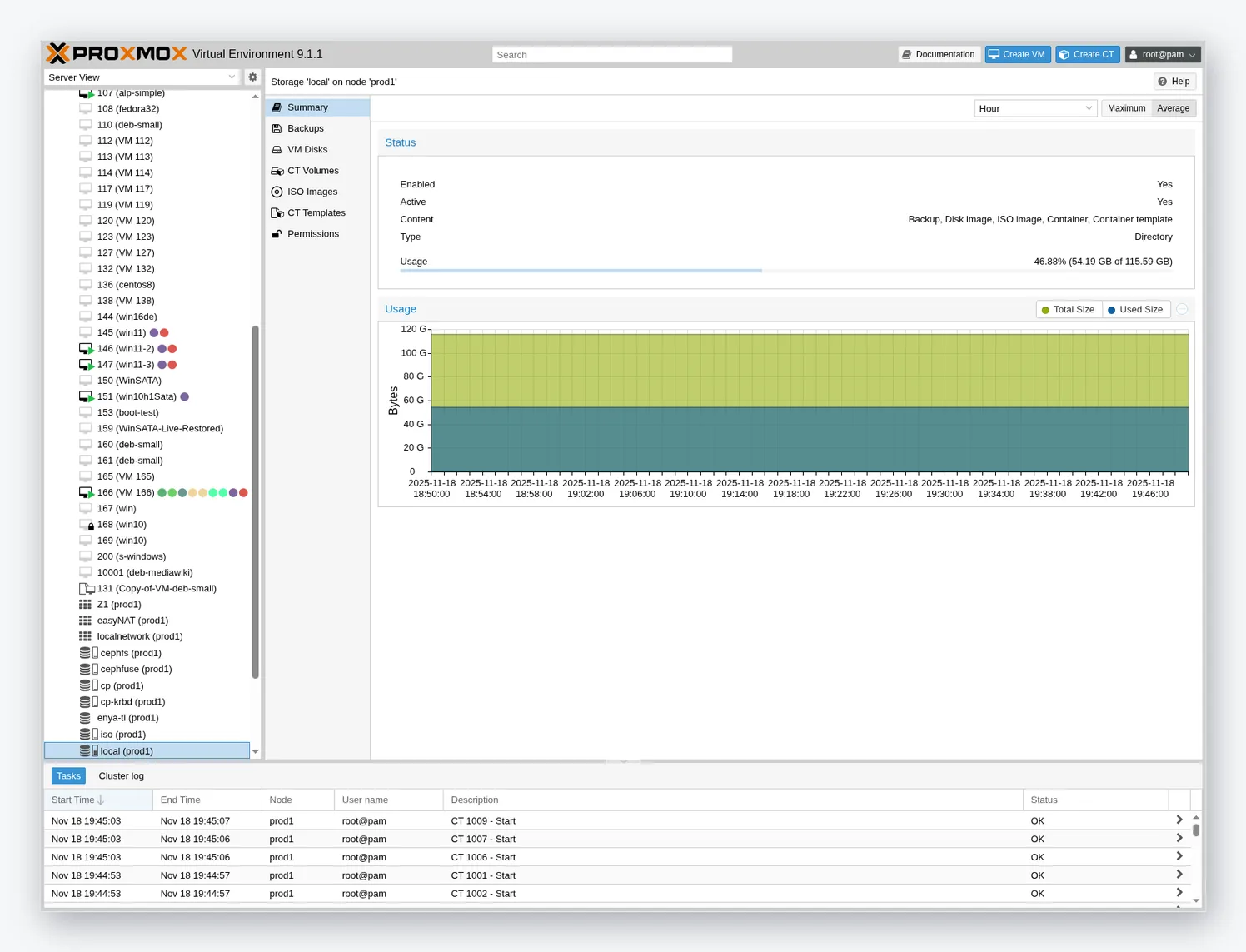
Proxmox VE storage summary showing backup content type and capacity usage over time

Storage backing VM disks, ISO images, templates, and scheduled backups

The outcome

Safarifone now runs its data center as a single Proxmox VE cluster it fully controls. Six nodes give the operator headroom and high availability, backups run and are verified on a schedule, and Smart Fusion delivered the documentation and training for Safarifone's team to operate and expand the platform on its own.

Technology stack

Proxmox VEProxmox VE Cluster & HAKVM / QEMULXCSupermicro serversHP ProLiant DL380ZFSSoftware-defined networkingDockerLinux

Delivered through Cloud Engineering & Implementation.

View the Service